
Lifeboat front page › Shipped abroad, the page you are on now
Order stage four of four
Stage four: a carrier holds the box now
The calmest stage. A carrier has the box and delivers it whether or not the agent still answers. What you lose is help with claims, so the records shift toward tracking and unboxing.
Signs a carrier now holds the box
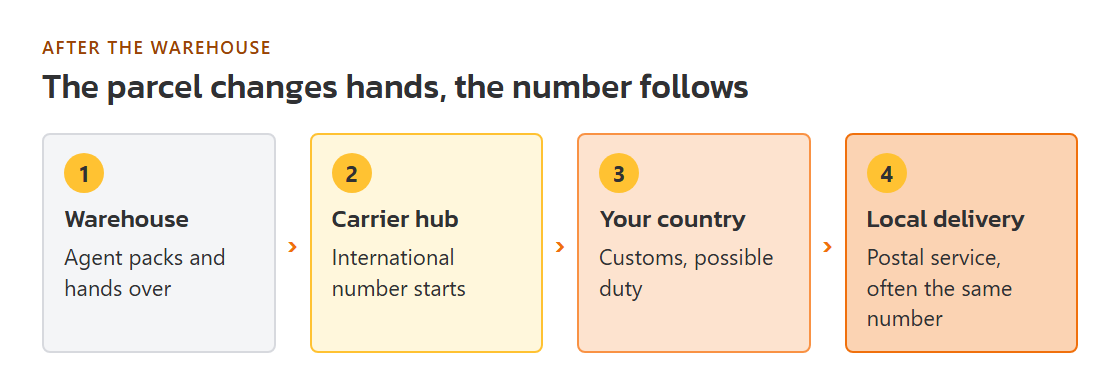
You paid freight and hold an international tracking number that a carrier's site recognises. The tracking history shows the parcel handed over, departed, or arrived in your country. At this point the agent's role is mostly over. A parcel with a carrier keeps moving whether or not the agent's site works.
What is exposed once a carrier has the box
Usually little. The carrier delivers to the address on the label and contacts the addressee about any customs or duty charges. What you lose when the agent goes quiet is its help with problems: a lost parcel claim, insurance the agent sold you, a dispute about damage, or a returned parcel that goes back to the warehouse. Those depend on the agent, so they are the exposed part.
Records worth keeping at this stage
- The international tracking number and the carrier or line name.
- Screenshots of the tracking history, taken now and again at each change.
- The freight receipt (your second payment) and the declared value written on the parcel.
- The parcel weight and the address exactly as the agent had it.
- Any insurance or value-added service you paid for, with its receipt.
- When it arrives: an unboxing video from sealed parcel to contents, and photos of the label.
Contact order once the box is moving
- The carrier, on its own website. Enter the tracking number there rather than on the agent's page. If the line hands over to a local service, the carrier's page usually names it.
- Your local postal or courier service. Once the parcel is in your country, this is the party that holds it, takes duty payments and arranges redelivery.
- The agent, only for claims. Loss or damage claims and insurance go through the agent, so write to it with the tracking number and photos, and keep the message.
- Your payment provider, only if the parcel never arrives. Use the freight receipt and the frozen tracking history as your record.
Hold off on these for now
- Paying a "customs fee" link sent by text message. Duties are paid through the carrier's or the postal service's own site or at the door.
- Refusing delivery to make a point. A refused parcel goes back toward the warehouse, which is the place you cannot reach.
- Throwing away packaging before you have photographed the label and contents.
Pandagoo at this stage, from the archive
Pandagoo listed package tracking among its free services and said it would keep watching each international parcel until it reached you. That watching stopped with the site. Its saved text also says the delivery itself was handled by third-party carriers, which is why the carrier's own tracking page is now the place to look. After delivery, the archive gave a short window to report problems: three days from receipt, with unboxing photos and video kept. With the agent unreachable, keep those records anyway; they are what a carrier or a payment provider will ask for.
“Friendly reminder: The tracking number is the unique identifier for your forwarding order. Do not disclose it to anyone.”
Pandagoo English interface text, saved copy of March 8, 2026, forwarding screen. The advice applies to any tracking number now that no agent stands between you and the carrier.