Lifeboat front page › Tracking and freight, the page you are on now
Background reading
Tracking numbers, freight and customs when the agent is out of reach
How shipping from a Chinese agent warehouse works, which tracking number belongs to whom, and why a parcel already with a carrier is the safest place for your goods to be.
Three tracking numbers, three owners
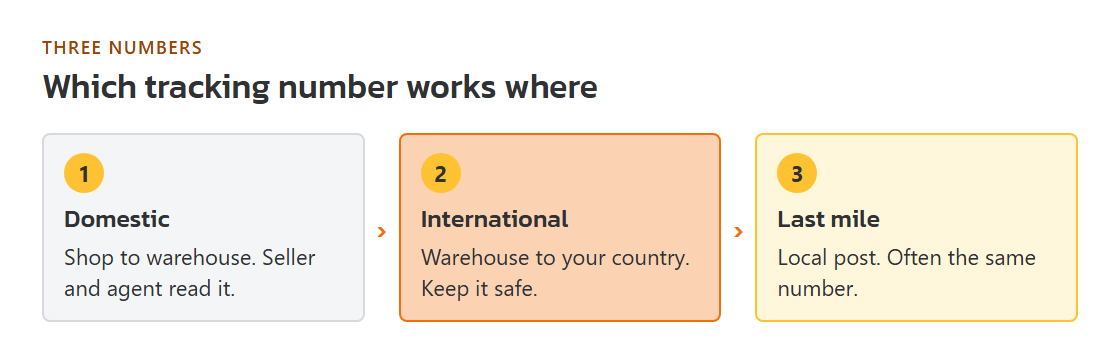
An agent order can carry three different tracking numbers, and each one is useful to a different party.
- The seller's domestic number tracks the trip from the shop to the agent's warehouse inside China. The seller and the agent can use it; it proves the goods left the shop.
- The international number is issued when the agent hands your parcel to a carrier or a consolidator. It is the number that matters after an outage.
- The last-mile number is what your local postal or courier service uses. On many routes it is the same as the international number; on others the carrier's page shows a new one after the handover.
Pandagoo's saved screens have fields for all three: a domestic tracking number on forwarding orders, an "International logistics number" on parcels, and a search box for any tracking number.
Freight: how a parcel is priced
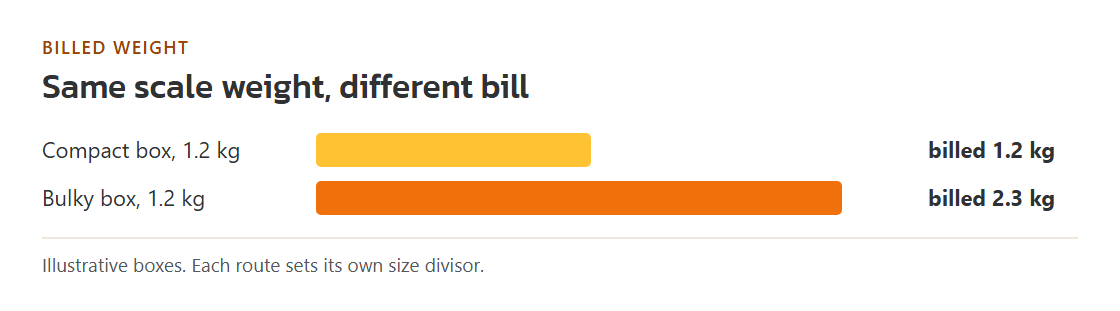
International freight is priced by weight, but not always by the weight on the scale. Carriers compare the actual weight with a volumetric weight worked out from the box size, and charge the higher figure. A light, bulky parcel such as a padded jacket in a large box can be billed at nearly twice what it weighs. Each route sets its own size divisor, so the same box can price differently on two lines.
Routes also limit what they carry. Items with batteries, liquids, powders and magnets often need a special line or are refused. Pandagoo's archived list of prohibited items started with perfume, and its freight form asked whether a parcel held built-in batteries, power banks, glasses or small cosmetic liquids. If a parcel is stuck at the packing stage, a restricted item is one common cause, outage or not.
The customs label figure, and the duty that follows
Every international parcel carries a declared value for customs. Pandagoo's form accepted values from 1 to 120. Whatever figure goes on the parcel, your country's customs may inspect it and charge duty, and the carrier will ask you to pay before delivery. Those charges come from your country's rules, not from the agent, and they are paid to the carrier or postal service. Keep the notice and the receipt; they are part of the parcel's record.
After the agent stops, the parcel keeps moving
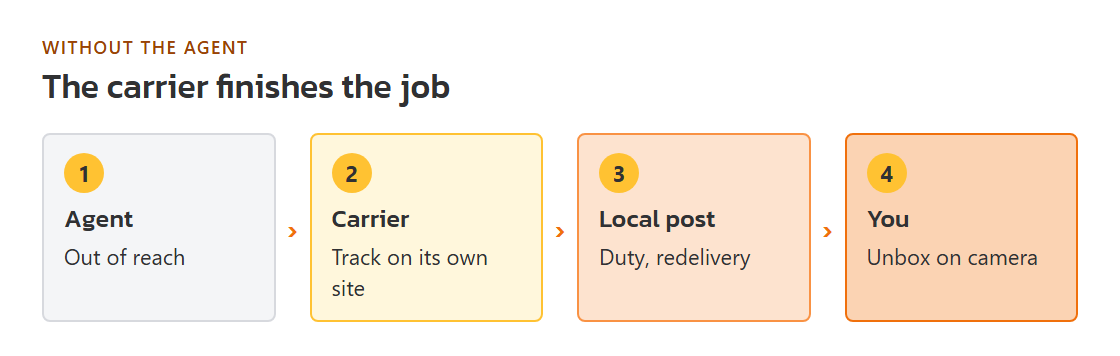
A carrier that has accepted a parcel is paid and has a delivery address. It does not need the agent to finish the job. So the practical steps are about the carrier: track the international number on the carrier's own site, sign up there for delivery notices if it offers them, and contact your local service directly if the parcel stalls after arriving in your country. The one thing you lose is the agent's help with a lost parcel claim. Keep tracking screenshots dated, so that if a claim ever becomes possible, the history is on file.